
Tuesday, 16th July 2024.
CreditEconomy News Interview
…Over 500,000 people read our news story, number still counting

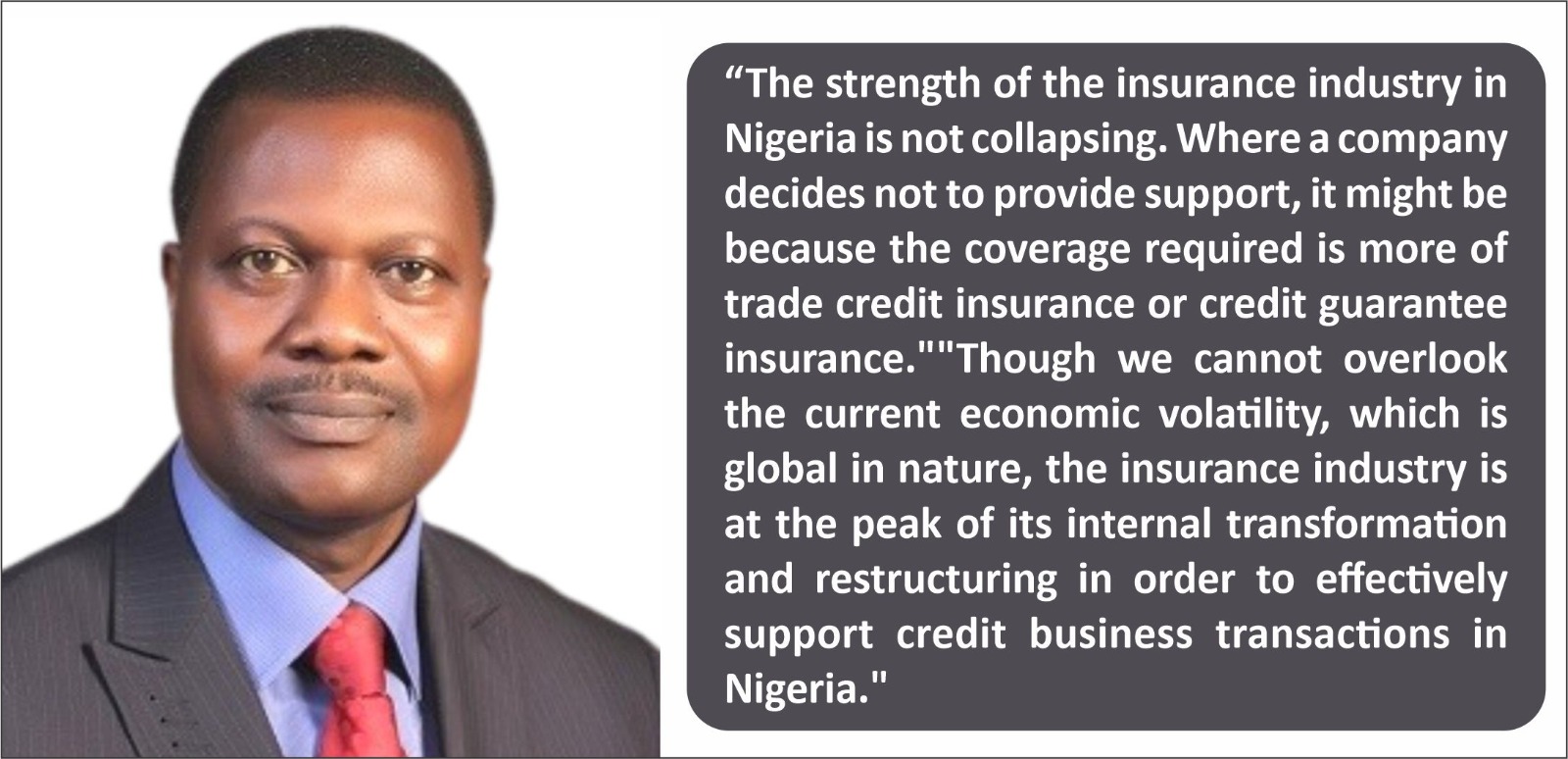
VICTOR TOYIN AKINNULI, FICA,
Acting Managing Consultant, Orataib Insurance Consulting Limited and Director, Oracred Limited, Orafarms Limited and African Reseller Partner, eSocialMint, Texas, USA.
HOW CREDIT INSURANCE SUPPORTS CREDIT BUSINESS IN NIGERIA
VICTOR TOYIN AKINNULI, FICA, Acting Managing Consultant, Orataib Insurance Consulting Limited and Director, Oracred Limited, Orafarms Limited and African Reseller Partner, eSocialMint, Texas, USA, speaks on “HOW CREDIT INSURANCE SUPPORTS CREDIT BUSINESS IN NIGERIA”, in the National Institute of Credit Administration’s Credit Economy News.
Is the strength of the insurance industry to support credit business transactions in Nigeria collapsing?
“The strength of the insurance industry in Nigeria is not collapsing. Where a company decides not to provide support, it might be because the coverage required is more of trade credit insurance or credit guarantee insurance.”
“Though we cannot overlook the current economic volatility, which is global in nature, the insurance industry is at the peak of its internal transformation and restructuring in order to effectively support credit business transactions in Nigeria.”
Currently, what are the credit mitigation products introduced by industry players to induce credit availability, credit accessibility, and credit affordability in Nigeria?
The product available to induce credit availability is credit insurance, which covers the three main causes of default; credit life insurance (covering death), credit disability insurance (covering accidental disability and critical illness), and credit unemployment insurance (covering involuntary loss of job).
Generally, credit insurance is purchased to pay off an outstanding loan, in the event of death, disability, or involuntary loss of employment.
Disability can be the result of an accident or a debilitating illness, otherwise called a critical illness. Credit insurance does not cover losses to a business or bad debts resulting from insolvency or delayed payments. This policy does not cover willful default by the loan customer.
Where the loan customer is a trader or SME, the wares and property purchased with the loan can be insured against fire and burglary exposures, while the plants, machinery, and equipment purchased with the loan can also be covered under Plant All Risks/Machinery Breakdown insurance.
What are the systemic problems hindering the delivery of the perceived synergy required from the insurance industry to support the overall well-being of Nigeria’s credit industry?
The problems of poor (improper) assessment of borrowers and lack of understanding of the need for protection by the lenders are part of the systemic problems.
“The migration of experts within the industry to foreign countries and the capacity to design and manage complex credit products is a systemic problem affecting the industry’s ability to offer effective solutions.”
Insufficient data on credit behavior is also a major problem, which consequently affects the development of robust credit insurance products. Reliable data is crucial for risk assessment and proper pricing in the insurance industry.
What would you say should be the role of the National Institute of Credit Administration (NICA) to ensure that the credit business ecosystem in Nigeria is healthy?
The National Institute of Credit Administration (NICA) should play a pivotal role in ensuring that Nigeria’s credit business ecosystem remains healthy and robust by working closely with other regulatory bodies to establish and enforce high standards for credit administration practices. This includes creating comprehensive guidelines for credit risk management, ethical lending practices, and credit reporting.
NICA should disseminate best practices in credit management and administration. This includes developing and sharing case studies, research findings, and industry reports that highlight successful strategies and innovations in the credit market.
NICA should encourage the adoption of innovative technologies in credit administration. This includes supporting the development and implementation of fintech solutions that can streamline credit processes, enhance risk assessment, and improve credit accessibility. A focus on consumer protection means ensuring that borrowers are well-informed about their rights and responsibilities, promoting transparency in lending practices, and providing educational resources to help consumers make informed decisions.
It is not out of place if NICA could facilitate the collection, analysis, and dissemination of credit-related data by maintaining a comprehensive database on credit performance, defaults, and market trends.
“NICA should liaise with credit insurance providers in Nigeria to see how credit insurance can be designed to cover some risks that are not currently granted in the market but could be found in most advanced countries.”

As a chattered prestigious body of eminent credit management elites, NICA is empowered by law to, control supervise and regulate credit management profession in Nigeria; the institute preserves, promotes and protects the integrity and interests of credit business across sectors of then economy.
National Institute of Credit Administration,
Old No 1 (New No 21) Mabogunje Road, Oniru Estate, Victoria Island, Lagos Nigeria
Tel: 234-(080)-340-30160
Mobile: 234-(070)-558-53470
Office: 234-(070)-338-14790,
234-(081)-278-08900